What makes a resume for an AR/VR developer stand out and win interviews?
AR/VR Resume Crafting Guide for 2026
The XR field is growing fast. Employers want more than just code. They want someone who can ship immersive experiences that users actually enjoy. This guide breaks down practical steps you can take to make your resume clear, compelling, and recruiter-friendly. You’ll find headline ideas, profile templates, and measurable achievements you can reuse today.
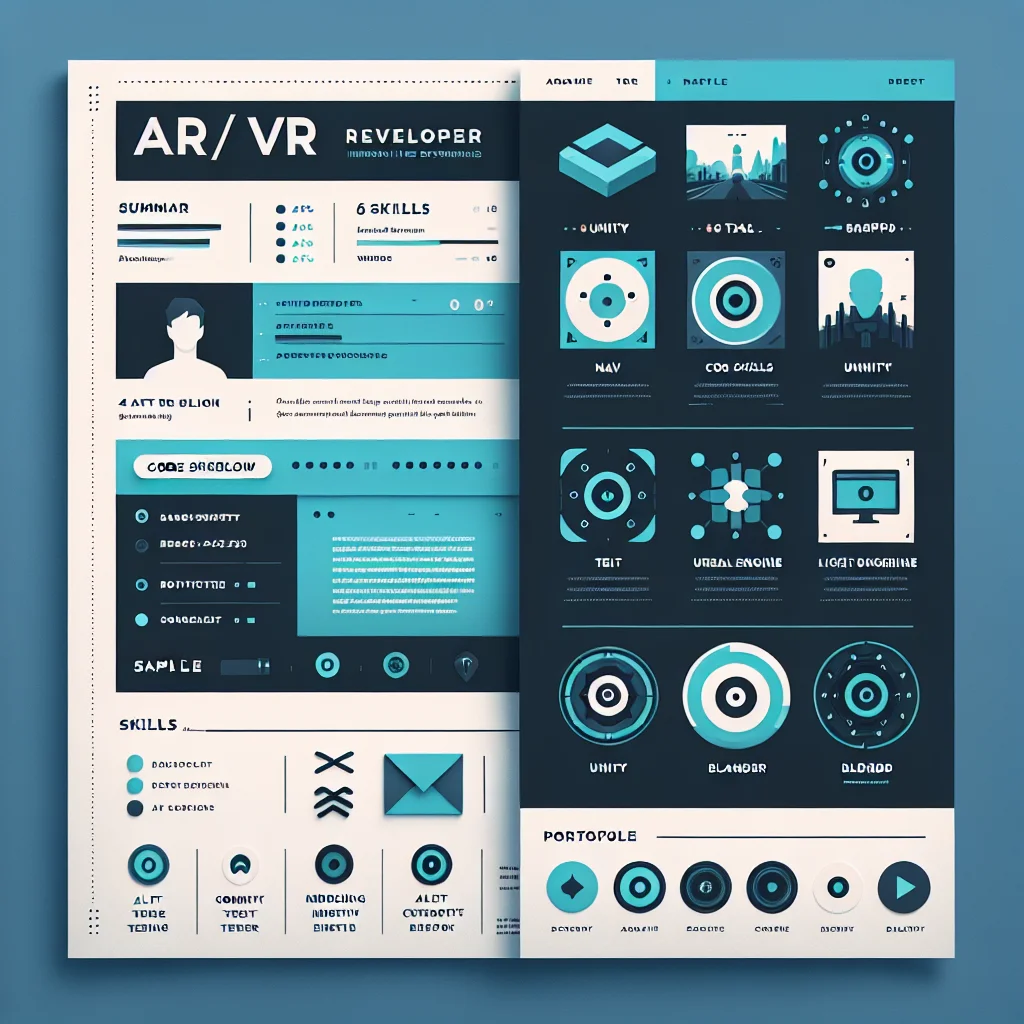
How to write a successful resume for AR/VR developer
First, tailor your resume for the job you want. Most AR/VR roles value Unity or Unreal Engine skills, C# or C++, and hands-on project work. Add a few metrics that show impact, not just activity. Recruiters skim quickly, so make every line count. Use keywords naturally so applicants tracking systems can find you without forcing a keyword dump. LSI terms like spatial computing, 3D graphics programming, and immersive experiences reinforce your fit without sounding fake.
You’ll also want a strong portfolio. A resume is a map; the portfolio is the terrain. Link to demos, GitHub repos, and playable projects. Be ready to discuss the technical choices behind a project during interviews. Mention hardware experience too—Quest/Quest Pro, HoloLens, or other XR devices signal practical chops beyond software alone.
Below are practical sections you can borrow. They align with what recruiters in top XR companies look for, from headlines to hands-on achievements.
10 Proven resume headlines for AR/VR developers
- Junior AR Developer skilled in Unity, ARKit, and real-time rendering
- AR/VR Developer focused on spatial computing and responsive UX
- XR Software Engineer delivering immersive experiences with clean architectures
- Unity-C# AR/VR Specialist driving engagement through optimized pipelines
- Unreal Engine AR/VR Engineer with physics tuning and low-latency visuals
- Senior XR Developer leading cross-functional teams on large-scale projects
- Senior AR/VR Programmer optimizing performance for Quest and PC VR
- Cross-platform XR Developer blending ARCore and Unity for mobile-first apps
- 3D Graphics Engineer focused on rendering quality and asset pipelines
- Lead XR Designer-Programmer with end-to-end project delivery
Check Your ATS Score
See how well your resume performs against Applicant Tracking Systems
Tip: keep headlines concise and include a tool or domain cue (Unity, Unreal, ARKit, ARCore) plus a benefit (engagement, latency, delivery). This helps both humans and ATS find you faster. For more options, mix in a metrics angle like “30% faster rendering” or “40% higher user retention.”
Crafting a killer profile summary section
Your profile summary should be a snapshot of who you are as a developer and what you deliver. It should mention years of experience, core tools, and one or two standout outcomes. Use a clean structure: years of experience, key tools, notable outcomes, and a line about your collaboration style or passion for XR.
- Template 1 (entry-level): 2 years of hands-on AR/VR work using Unity and ARKit. Passionate about turning ideas into deployable demos with clean code and solid UX.
- Template 2 (mid-level): 4 years building immersive experiences in Unity and Unreal. Proven ability to boost user engagement and reduce latency in AR apps.
- Template 3 (mid-level emphasis on collaboration): XR developer with cross-team leadership experience. Delivers polished prototypes and production-ready tools.
- Template 4 (technical focus): Real-time graphics programmer specializing in rendering optimizations for mobile and PC XR devices.
- Template 5 (senior): Lead XR engineer who ships end-to-end AR/VR apps at scale, from concept to launch, with measurable business impact.
How to adapt: mix your tools, project scope, and measurable outcomes into the summary. Keep it to 4–6 lines at most. If you can, mention a standout result in numbers—like latency improvements, engagement boosts, or user retention gains. This makes your story tangible for recruiters and managers alike.
AR/VR job achievements: what to include and how to quantify
Achievements show what you actually accomplished. Use a simple formula: Action verb + tool or method + metric + impact. For example, “Optimized Unreal Engine physics for 30% faster VR rendering, reducing latency and improving player comfort.” Keep numbers concrete and easy to verify.
Entry-level examples
- Implemented a mobile AR prototype using Unity and ARKit that demonstrated a working prototype in 6 weeks.
- Integrated ARCore features to enable markerless tracking in a classroom app, improving usability by 25% in beta tests.
- Shipped a VR scene with optimized LODs that reduced draw calls by 18% on mid-range hardware.
- Led a small team to deliver a 3D scanning feature with Unity, boosting app versatility for field use.
- Created automated test scripts for VR interactions, increasing stability of demos during testing cycles.
Mid-level examples
- Redesigned avatar animation pipeline in Unity, trimming processing time by 32% and boosting frame rate.
- Implemented cross-platform AR features (iOS and Android) with ARKit/ARCore, expanding reach by 40% in target markets.
- Refined spatial audio in a multiplayer VR app, improving user immersion and reducing motion sickness reports by 22%.
- Led diagnostics and fixes for latency bottlenecks in a Quest-native app, cutting input lag by 28%
- Delivered a toolchain for rapid asset import (Blender to Unity), decreasing iteration time by 35%.
Senior examples
- Directed a multi-team XR project that shipped 3 immersive apps on time, each achieving over 100k interactions in user testing.
- Architected a cross-platform XR rendering pipeline with Unreal and Unity, achieving a 40% improvement in visual fidelity per watt.
- Secured user retention gains by 25% through UX refinements in an AR shopping app with ARKit and computer vision improvements.
- Managed external partners to deliver hardware-accelerated features on Quest Pro, reducing device heat and extending play sessions.
- Mentored 4 developers, standardizing code reviews and test plans that cut bugs in production by 30%.
When you write achievements, tie them to business outcomes when possible—user engagement, retention, revenue impact, or time-to-market improvements. If you worked freelance or on student projects, frame results as learnings and transferable skills rather than only tech details. This helps recruiters see potential in non-traditional backgrounds.
Create ATS-Compliant Resume
Build a professional resume that passes all ATS filters
Skills, projects, and certifications that elevate your resume
- Core tools: Unity, Unreal Engine, C#, C++, ARKit, ARCore, Blender, Maya, 3D modeling, rigging, animation.
- Cross-platform and performance: mobile AR, PC VR, rendering pipelines, latency optimization, cross-device testing.
- Portfolio and demos: links to playable demos, GitHub projects, and design notes that explain decisions.
- Hardware experience: Oculus Quest, HoloLens, other XR headsets, motion controllers, haptics.
- Certifications: Unity Certified, other recognized XR credentials that validate your skills.
Boosters that help you stand out include a strong GitHub portfolio, successful hackathon wins, and a few well-documented case studies. If you have direct experience with AR workflows or computer vision pipelines, highlight it clearly in the skills or project sections.
Full AR/VR resume template and a simple checklist
Use a clean, ATS-friendly structure. Start with a header that includes your name and contact details. Then a concise summary. Add a strong core skills section followed by project highlights and professional experience. Include a separate section for certifications and portfolio links. End with education and any relevant awards or community contributions.
- Header: Name, role title, location, email, LinkedIn, and portfolio link.
- Profile: 4–6 lines with tools and a key impact sentence.
- Core skills: Short list, focusing on XR-relevant skills and tools.
- Projects: 3–5 bullets, each with tools, scope, and quantified results.
- Experience: Reverse-chronological; emphasize AR/VR wins and collaboration outcomes.
- Education and Certifications: relevant to XR.
- Portfolio: links to code demos, design notes, and playable experiences.
Optimize LinkedIn Profile
Enhance your LinkedIn presence to attract recruiters
If you want a ready-to-use template, you can adapt our guidance into a downloadable checklist. It helps you ensure you’ve covered the most important XR resume elements before sending it out.
Common mistakes and ATS tips
A common trap is keyword stuffing. It hurts readability and can look forced. The better approach is to weave keywords into natural sentences and project descriptions. Another mistake is listing many tools without showing how you used them to deliver value. Focus on context, outcomes, and evidence of impact.
Important ATS tips:
- Use standard section headings like Summary, Skills, Projects, Experience, Education, Certifications. ATS scans these sections, so keep them clear.
- Place the most relevant keywords near the top. Don’t cram unrelated terms just to match a job description.
- Keep a clean, simple layout. Avoid complex tables or images that ATS can misread.
- Grab attention with a strong headline and a metrics-based achievements section.
- Always tailor each resume to the job posting. A quick pass to align with the listing increases your odds.
For more on ATS optimization for XR roles, check our detailed guidance. Create ATS-optimized XR resume.
In summary, a standout AR/VR resume blends clear structure, strong headlines, a crisp summary, and quantified achievements. By aligning your experience with XR outcomes and showing tangible results, you give recruiters a clear sense of your value. Keep refining your portfolio and stay up to date with the latest XR tools and trends. The effort you invest now pays off with better interviews and faster opportunities in this dynamic field.
Related Resume Guides
- How Can You Write A Successful Resume For A Low Code Developer
- How To Build A Standout Frontend
- Mobile App Developer In 2026 (Examples & Templates)
- Woocommerce Specialist
- Game Developer In 2026 (Examples + Templates)
- Devops Engineer In 2026 (Templates & Examples)
- Infrastructure Engineer In 2026
- Progressive Web App Developer
- A Shopify Developer Role Resume
- How Do You Craft A Resume That Lands A Platform Engineer role