How to Write a Standout Resume for a Biotech Researcher
Checkout ATS compliant resume template for this role and our vast repository of resume templates.In biotech roles, your resume must translate lab work into real value. Hiring managers skim quickly, so you need sharp headlines, a crisp summary, and strong, quantified achievements. This guide gives practical templates, ready-to-use examples, and concrete tips to elevate your resume for biotech research roles.
Top 10 Resume Headlines for Biotech Researchers
- MS in Biotechnology | CRISPR-Cas9 Expert | Published in Journal of Biotechnology
- Biotech Research Scientist | Cell Culture & Assay Development
- Biotech Researcher | High-Throughput Screening | Data-Driven
- PhD Candidate in Biotech | Genomics & Bioinformatics
- Biotech Laboratory Specialist | ELISA & PCR Proficiency
- Research Technician | Bioprocess Optimization
- Biotech R&D Associate | Product Development & Validation
- Postdoc in Biotech | Protein Engineering & Assays
- Junior Biotech Researcher | Thesis-driven with Publications
- Biotech Scientist | CRISPR Screens & Data Analytics
Check Your ATS Score
See how well your resume performs against Applicant Tracking Systems
Crafting a Killer Profile Summary Section
Structure helps readers quickly see your value. Use 3–4 sentences that cover your degree, core skills, and your impact. Include one metric if possible, and mention key techniques you master. Tailor the summary to the job you want, not just your degree.
- Summary Example 1 (Fresher): Recent MSc in Biotechnology with hands-on experience in CRISPR editing, cell culture, and data analysis. Passionate about translating lab results into practical therapies. Seeking a research assistant role to contribute to drug discovery projects.
- Summary Example 2 (Entry-Level): Biotech graduate skilled in molecular cloning, ELISA, and statistical analysis. Contributed to a thesis on gene expression profiling and presented findings at lab meetings. eager to support a biotech team with precise experiments and meticulous data records.
- Summary Example 3 (Early Career): Research-focused scientist with 2 years of bench work in protein purification and assay development. Proficient with PCR, qPCR, and mass spectrometry data interpretation. Aiming to advance pipeline efficiency in an R&D setting.
- Summary Example 4 (Mid-Career): Postgraduate scientist with a track record in CRISPR-based editing and cell-based assays. Authored a workshop paper on off-target effects and led a small project reducing assay time by 20%. Ready to apply rigorous lab skills to new biotech challenges.
- Summary Example 5 (PhD Student): PhD candidate focusing on gene editing and protein engineering. Experience with mentoring undergrads, maintaining GMP-like lab discipline, and presenting data to interdisciplinary teams. Looking for a research role that blends discovery with practical outcomes.
- Summary Example 6 (Industry Transition): Biotech researcher transitioning from academia to industry. Skilled in CRISPR, cloning, and data visualization. Demonstrated ability to translate complex results into actionable project milestones for cross-functional teams.
- Summary Example 7 (Publications): Scientist with two peer-reviewed publications on biomarker discovery. Proficient in CRISPR, cell culture, and flow cytometry. Committed to delivering reliable data and robust experimental design.
- Summary Example 8 (No Publications): Analytical mind with hands-on lab work in molecular biology and assay optimization. Strong collaborator who uses statistics to improve experimental decisions. Eager to join a biotech team and contribute to product development.
Biotech Achievements: What to Include in Your Experience Section
Use a simple formula for each bullet: Action verb + technique or method + measurable outcome. This clarifies what you did and why it mattered. Even if you have no long career track, you can quantify thesis work, internships, or project outcomes.
Formula: Action verb + technique + result (percentage, time saved, yield, accuracy). Examples below show how to tailor bullets for biotech roles.
- Optimized CRISPR protocols, reducing off-target effects by 25% and cutting editing time by 40%.
- Developed a cell-based assay that increased hit detection sensitivity by 30% in a 96-well format.
- Validated a new ELISA assay with a 98% concordance to a reference method, enabling faster batch release.
- Implemented a high-throughput screening workflow that shortened lead-identification cycles by two weeks.
- Automated data capture with LIMS, reducing manual entry errors by 90% across 3 projects.
- Led a project with 5 researchers, delivering a manuscript-ready dataset ahead of schedule.
- Quantified expression levels using qPCR and Western blot, guiding a strategy shift that improved assay precision by 12%.
- Drafted SOPs for critical bench steps, reducing training time for new hires by 25%.
- Co-authored a publication on gene regulation mechanisms cited in a major biotech journal.
- Optimized protein purification protocol, achieving a 20% increase in yield with maintained purity.
- Designed a robust statistical plan for experiments, improving result reproducibility across three assays.
- Presented quarterly findings to cross-functional teams, influencing two project pivots.
- Mentored two interns, producing reliable lab records and improved experimental consistency.
- Implemented data visualization dashboards that accelerated decision-making in the team.
- Collaborated with outside partners to validate a biomarker assay, setting the stage for a joint grant proposal.
Create ATS-Compliant Resume
Build a professional resume that passes all ATS filters
Essential Sections for Biotech Researcher Resumes
- Technical skills: PCR, ELISA, qPCR, cell culture, Western blot, mass spectrometry, flow cytometry, LIMS, sequencing, and data analysis tools.
- Education, thesis, and publications: Degree details, thesis title, and any peer-reviewed work.
- Projects and collaborations: Short bullets about major projects, collaborators, and outcomes.
- Certifications and training: GMP-like practices, safety training, or software licenses.
7 Ways to Elevate Your Resume for Biotech Roles
- ATS keywords: Include terms like “CRISPR,” “high-throughput screening,” “qPCR,” and “cell culture” in context, not as a list.
- Quantify impact: Always add numbers for efficiency, yield, time saved, or accuracy where possible.
- Publications and theses: Put publications, conference posters, and thesis highlights in a dedicated section if real; otherwise reference presentations or abstracts.
- Tailor for each role: Align your skills and achievements to the job description and the company’s focus area (drug discovery, diagnostics, etc.).
- Include AI-friendly tailoring: Use AI-assisted tools to adjust phrasing for each posting while keeping the human touch intact.
- Focus on practical results: Translate lab work into business impact, like faster screening, higher reproducibility, or cost reductions.
- Clean design and templates: Use an ATS-friendly, clean layout with clear headings and consistent fonts.
Common Mistakes to Avoid
- Overloading with generic responsibilities instead of concrete achievements.
- Using vague terms like “responsible for” without outcomes.
- Forgetting to tailor the resume to the specific biotech field (therapeutics, diagnostics, or agricultural biotech).
- Ignoring publications, posters, or presentations if they exist.
- Neglecting to mention software tools and data analysis methods you used.
Free Biotech Researcher Resume Template Download
For speed, use a ready-made, ATS-optimized template designed for biotech roles. It helps you place the most important details first and keeps your achievements front and center. Explore biotech-focused templates that align with industry expectations. You can also view concrete resume examples in this space for inspiration, and check out freshers’ samples to vibe with no-experience scenarios.
Practical Next Steps to Elevate Your Application
Beyond the resume, build a strong narrative across your LinkedIn profile and any portfolio of lab work. Include a short, publication-ready summary of your most impactful results. If you lack a lot of publications, highlight strong lab notes, reproducible results, and collaborations that show your reliability.
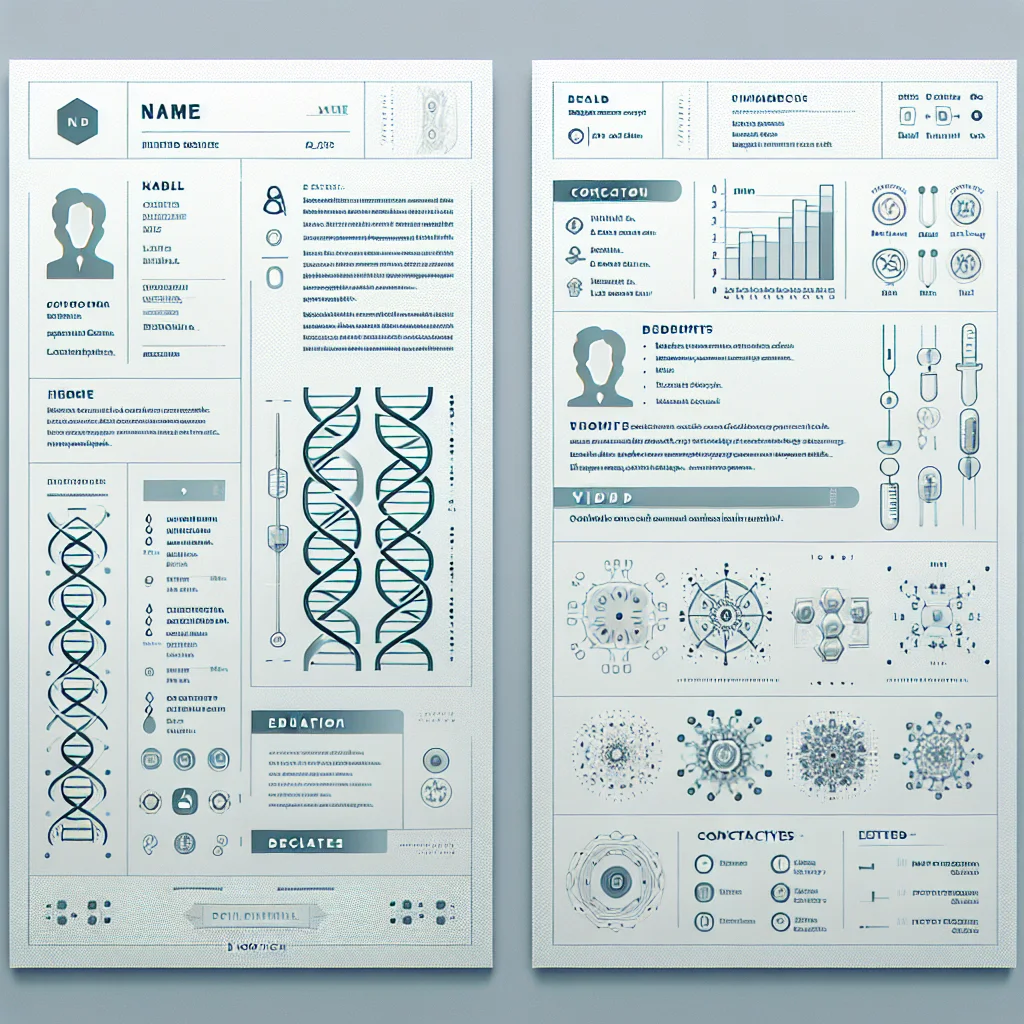
Tip: When you add the image, place it near the top of the page to reinforce the visual balance and immediately signal your field.
Internal Resources to Help You Succeed
To see concrete examples and templates, check these internal pages: biotech resume examples that illustrate varied career stages and formatting, entry-level biotech resume samples, and ATS-friendly templates designed for quick reader scoring.
Conclusion
A strong biotech researcher resume is clean, concrete, and tailored. Start with a compelling headline, write a focused profile summary, and back each claim with numbers or clear outcomes. Use ready-made templates to ensure ATS compatibility and clear readability. With these strategies, you’ll stand out to recruiters and improve your chances of landing interviews.
Want more tailored help? Explore our curated resources and adapt the examples to your own journey. A precise, quantified, and well-structured resume makes your science easy to evaluate at a glance.
Frequently asked questions
- What should I highlight in a biotech resume if I have limited publications?
- How do I quantify lab results without sounding boastful?
- Which keywords matter most for biotech job postings in 2026?
Optimize LinkedIn Profile
Enhance your LinkedIn presence to attract recruiters